

Hostinger works well for many new websites, but its introductory price is not the only factor worth checking. Resource limits, renewal costs, performance, support, and upgrade options can become more important as a website grows.
A simple blog may need only basic shared hosting, while an online store, business website, or application can require more CPU, RAM, faster storage, stronger caching, and greater server control.
This comparison focuses on practical hosting value, looking at performance, security, pricing, resources, support, and scalability to help you choose an option that matches your website’s actual requirements.
When Is It Worth Leaving Hostinger?
A hosting change usually makes sense when the current plan starts creating limitations or no longer offers the value you need. The right alternative should solve a specific problem, not simply offer another low introductory price.
| Reason to Compare | What Can Change | Why It Matters |
| Rising Costs | Renewal pricing and billing terms | Affects your long-term hosting budget |
| Limited Resources | CPU, RAM, storage, bandwidth | Determines how much workload your site can handle |
| Slow Performance | Storage, caching, CDN, server technology | Can affect loading and response times |
| Security Needs | Backups, SSL, malware protection, DDoS | Adds protection and recovery options |
| Future Growth | VPS, VDS, dedicated hosting | Provides room when shared hosting becomes limiting |
The best alternative depends on the problem you are trying to solve. A cheaper plan may help with budget, while a different infrastructure or upgrade path may matter more for a growing website.
What We Looked At Before Ranking
We compared the providers using hosting factors that remain relevant after your website goes live. The focus is on practical features rather than judging each service only by its advertised starting price.
| Comparison Area | Details Considered | What It Shows |
| Performance | NVMe/SSD, LiteSpeed, caching, CDN | How the hosting is equipped for website workloads |
| Resources | CPU, RAM, storage, bandwidth | Available capacity for websites and applications |
| Security | SSL, backups, malware, DDoS | Protection and recovery capabilities |
| Pricing | Starting price, renewal, billing period | The broader cost of the hosting plan |
| Scalability | VPS, VDS, dedicated options | Whether you can upgrade as requirements increase |
Pricing and promotional benefits can vary by plan and billing period, so the current offer should always be checked before purchasing.
The 5 Hostinger Alternatives Worth Comparing
There is more to hosting than the monthly price. We compared five Hostinger alternatives by looking at server resources, performance features, security, support, pricing, and future upgrade options.
1. YouStable: NVMe Hosting With Flexible Upgrades
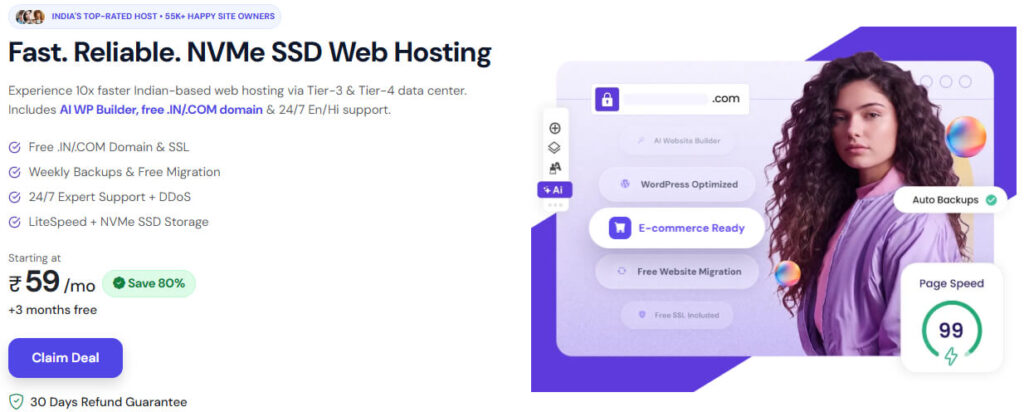
YouStable offers shared hosting, WordPress hosting, VPS, Windows VPS, dedicated servers, and domain services, covering both entry-level websites and higher-resource projects.
Shared hosting starts at $0.62/month, while VPS starts at $3.67/month. The current offer shown in the supplied material advertises up to 80% savings, plus extra free months on qualifying plans.
Overall, YouStable is a strong option for bloggers, WordPress users, Indian businesses, developers, and growing websites that want NVMe storage, LiteSpeed, migration support, and a clear path toward VPS or dedicated hosting.
Features That Matter for Websites
YouStable combines performance, security, backup, and management features across applicable hosting plans.
- NVMe SSD Storage: Provides fast access to website files and databases.
- LiteSpeed & LSCache: Helps serve cached website content efficiently.
- Free SSL: Encrypts connections between visitors and websites.
- Free Migration: Helps eligible customers transfer existing websites.
- Weekly Backups: Provides recovery points for website data.
- DDoS Protection: Helps reduce the impact of malicious traffic floods.
Performance and Protection
Its hosting setup combines fast storage with LiteSpeed, caching, SSL, backups, and security tools, giving website owners several practical features for everyday hosting.
- NVMe Storage: Supports fast storage access for website workloads.
- LiteSpeed: Helps handle dynamic and cached content efficiently.
- LSCache: Reduces repeated processing for eligible cached pages.
- SSL: Protects data transferred between visitors and websites.
- Imunify360: Available on applicable plans for additional malware protection.
- DDoS Protection: Helps mitigate malicious traffic directed at hosting resources.
YouStable Pricing
| Plan | Starting Price | Key Resources | Suitable For |
| Shared Hosting | $0.62/mo | 50 GB NVMe, 1 website, unmetered bandwidth | Blogs and small websites |
| VPS Hosting | $3.67/mo | 1 CPU, 4 GB RAM, 50 GB NVMe, 4 TB bandwidth | Developers and growing sites |
| Windows VPS | $19.99/mo | 2-core CPU, 4 GB RAM, 60 GB NVMe, 1 TB bandwidth | Windows applications |
| Dedicated Server | $77.99/mo | 4 CPU, 32 GB DDR4, 480 GB SSD, 10 TB bandwidth | High-resource workloads |
The supplied offer shows up to 80% savings. Shared Hosting includes 3 extra months free, while VPS, Windows VPS, and Dedicated Server include 2 extra months free. The displayed plans also state renewal at the same price.
Who Should Consider YouStable?
YouStable fits users who want an affordable starting plan without giving up access to VPS, Windows VPS, and dedicated server options when their website eventually needs more resources.
2. UltaHost: More Infrastructure Choices

UltaHost provides shared hosting, WordPress hosting, VPS, VDS, and dedicated servers, giving users several infrastructure levels as their website requirements increase.
Its supplied pricing starts at $4.39/month for Shared Starter, with higher-resource VPS, VDS, and dedicated options available for more demanding workloads.
Overall, UltaHost is relevant for beginners, WordPress users, developers, and growing businesses that prefer having multiple hosting environments available under one provider.
Hosting Options Available
- Shared Hosting: Designed for smaller websites and entry-level projects.
- WordPress Hosting: Built around WordPress website requirements.
- VPS Hosting: Provides more resources and control than shared hosting.
- VDS Hosting: Offers additional capacity for demanding projects.
- Dedicated Servers: Provides dedicated infrastructure for heavier workloads.
- Migration Support: Helps customers transfer existing websites.
UltaHost Pricing
| Plan | Price | Type | Suitable For |
| Shared Starter | $4.39/mo | Shared Hosting | New websites |
| VPS Basic | $6.89/mo | VPS | Growing websites |
| Power Plus | $47.29/mo | VDS | Resource-heavy projects |
| Ultra-X | $104.99/mo | Dedicated | High-resource workloads |
These prices come from the supplied comparison material, so billing terms, renewal pricing, and current promotions should be checked before purchase.
When UltaHost Makes Sense
UltaHost is worth considering when you want a hosting provider with a progression from shared hosting to VPS, VDS, and dedicated infrastructure as your resource requirements increase.
3. HostyCare: Clearer Resource Limits

HostyCare offers shared hosting, WordPress, WooCommerce, VPS, cloud, and dedicated server solutions, giving website owners options for different workloads.
Its shared hosting uses NVMe storage with features including LiteSpeed with CDN, SSL, migration assistance, backups, malware scanning, cPanel, and developer tools on applicable plans.
Overall, HostyCare is a useful option for developers, WordPress users, and growing websites that want clearer information about CPU, RAM, PHP workers, storage, and I/O before upgrading.
Where HostyCare Has an Edge
The provider combines performance features with defined resource allocations, making its shared plans easier to compare when resource limits are an important consideration.
- NVMe SSD: Provides fast access to website files and databases.
- LiteSpeed + CDN: Helps cache and deliver website content efficiently.
- Free Migration: Assists eligible customers with moving existing websites.
- Malware Scanning: Checks website files for potentially harmful content.
- Developer Access: Supports SSH, Git, terminal, Node.js, Python, and PHP.
- Managed WordPress: Provides tools for managing WordPress websites.
Resource Details for Growing Websites
HostyCare increases resources across its shared plans, including CPU, RAM, PHP workers, storage, and I/O capacity.
This makes the plans easier to assess when a website’s requirements are moving beyond basic shared hosting but do not yet justify a VPS.
- CPU: Higher tiers provide additional processing capacity.
- RAM: More memory is available on higher plans.
- PHP Workers: Higher limits allow more PHP processes to run concurrently.
- I/O: Increased allocations provide more input/output capacity.
- Storage: NVMe capacity increases across the plans.
- Backups: Provides recovery options for website data.
HostyCare Pricing
| Plan | Price | Resources | Suitable For |
| Basic | ₹59/mo | 25 GB NVMe, 1 CPU, 1 GB RAM | Personal websites |
| Starter | ₹129/mo | 50 GB NVMe, 2 CPU, 2 GB RAM | Small businesses |
| Business | ₹239/mo | 120 GB NVMe, 3 CPU, 3 GB RAM | Growing websites |
| Enterprise | ₹599/mo | 200 GB NVMe, 4 CPU, 8 GB RAM | Resource-heavy websites |
The supplied pricing is based on 36-month terms, with the plans stating “Buy & Renew at the Same.” Higher plans also provide increased PHP worker and I/O limits.
Who Should Look at HostyCare?
HostyCare is particularly relevant for developers, WordPress users, growing businesses, and resource-demanding websites that want to understand shared hosting limits clearly before making the move to VPS.
4. BigRock: Simple Management With cPanel

BigRock brings domain registration, Linux and Windows hosting, WordPress hosting, VPS, and dedicated servers together, making it useful for different website requirements.
Its Linux hosting plans use NVMe SSD storage and cPanel, with applicable packages offering SSL, daily backups, email accounts, and malware scanning.
Overall, BigRock is a practical choice for bloggers, small businesses, and users who prefer familiar cPanel management alongside hosting, domains, and email services.
Everyday Tools You Can Use
BigRock focuses on features that make regular website administration easier, particularly for users who prefer a traditional control panel.
- NVMe SSD Storage: Provides fast access to website files and databases.
- cPanel: Offers a familiar dashboard for managing hosting services.
- Free SSL: Encrypts connections between visitors and websites.
- Daily Backups: Provides recovery points for website data.
- Email Accounts: Allows professional email addresses using your domain.
- Malware Scanning: Helps detect potentially harmful files on applicable plans.
What About Speed and Uptime?
BigRock combines NVMe storage with Varnish caching, helping eligible websites handle frequently requested content more efficiently. SSL, backups, and malware scanning add further protection.
The supplied material also lists a 99.99% uptime guarantee. This is a provider-stated guarantee, while actual website availability can depend on the hosting environment, configuration, and other factors.
BigRock Plans and Costs
| Plan | Price | Included Resources | Best Suited To |
| Standard | ₹69/mo | 20 GB NVMe, 1 website, 10 email accounts | Small websites |
| Business | ₹99/mo | 50 GB NVMe, 3 websites, 50 email accounts | Growing businesses |
| Pro | ₹129/mo | 100 GB NVMe, 5 websites, 100 email accounts | Established websites |
| Ultimate | ₹149/mo | 200 GB NVMe, 10 websites, 200 email accounts | Larger websites |
The supplied comparison lists renewal pricing at ₹409/month for Standard, ₹649 for Business, ₹759 for Pro, and ₹989 for Ultimate. Check the current billing terms and promotional pricing before purchasing.
Who Will Find BigRock Useful?
BigRock makes sense for cPanel users, bloggers, small businesses, domain buyers, and growing websites that prefer managing hosting, domains, and professional email through one provider.
5. HostPapa: Practical Hosting for Small Businesses
HostPapa provides shared hosting, WordPress hosting, VPS, and dedicated servers, giving smaller websites a straightforward starting point with options for higher-resource workloads.
Its supplied pricing starts at $2.95/month for Web Hosting and WordPress Hosting, while VPS and dedicated plans are available for websites that need additional capacity.
Overall, HostPapa is a practical fit for beginners, small businesses, WordPress users, and service-based websites that value simple management, business email, migration help, and security features.
Features That Help With Daily Management
HostPapa combines standard hosting essentials with business-oriented tools that can make website administration easier.
- Free SSL: Encrypts connections between visitors and hosted websites.
- Website Migration: Helps eligible customers move an existing website.
- CDN Support: Helps deliver cached content closer to visitors.
- Business Email: Supports professional email addresses using your domain.
- Malware Scanning: Helps identify potentially harmful website files.
- Multiple Hosting Types: Provides shared, WordPress, VPS, and dedicated hosting.
Performance and Website Protection
HostPapa uses SSD-based hosting with caching and CDN support. Applicable plans also include security measures such as malware scanning, firewall protection, and brute-force protection.
These features can help with routine website performance and account security, although the exact inclusions depend on the selected hosting plan.
HostPapa Plans and Pricing
| Plan | Starting Price | Hosting Type | Suitable For |
| Web Hosting | $2.95/mo | Shared Hosting | Small websites |
| WordPress Hosting | $2.95/mo | WordPress Hosting | WordPress websites |
| VPS Hosting | $2.95 | VPS | Growing businesses |
| Dedicated Hosting | $59.95/mo | Dedicated Server | High-resource websites |
The prices above come from the supplied comparison material. Promotional pricing, billing periods, renewal rates, and included resources can change, so the current plan details should be checked before purchase.
Who Should Consider HostPapa?
HostPapa is a sensible option for small businesses, beginners, WordPress users, and service websites that want straightforward hosting with email, migration assistance, security tools, and access to higher-resource hosting when needed.
Which Provider Fits Which Website?
The five alternatives serve different requirements. YouStable is strongest as an all-round option, while the others become more relevant depending on resources, management preferences, and the type of website you run.
| Your Priority | Provider to Consider | Reason |
| Affordable entry with upgrade options | YouStable | Shared, VPS, Windows VPS, and dedicated options |
| Multiple infrastructure levels | UltaHost | Shared, VPS, VDS, and dedicated hosting |
| Clearly defined shared resources | HostyCare | CPU, RAM, PHP worker, and I/O details |
| cPanel and domain services | BigRock | cPanel with hosting, domains, and email |
| Simple business hosting | HostPapa | Hosting, email, migration, and security tools |
The comparison is based on the supplied pricing and feature information, and individual plan inclusions can vary.
Hostinger Alternatives: Quick Comparison
The providers differ in their strengths, pricing, resource allocations, and upgrade paths. This table gives a practical snapshot before moving into the final selection.
| Provider | Starting Price | Best Known For | Suitable For |
| YouStable | $0.62/mo | NVMe, LiteSpeed, broad hosting range | Growing and India-focused websites |
| UltaHost | $4.39/mo | Shared, VPS, VDS, dedicated options | Developers and scaling projects |
| HostyCare | ₹59/mo | Defined shared resources | Resource-conscious websites |
| BigRock | ₹69/mo | cPanel, domains, email | Small businesses and bloggers |
| HostPapa | $2.95/mo | Business-focused hosting | Beginners and small businesses |
The prices come from the supplied comparison material. Promotional rates, billing terms, renewal pricing, and plan inclusions may change, so verify the current offer before purchasing.
YouStable vs UltaHost
YouStable combines NVMe, LiteSpeed, India-focused hosting, and several server types. UltaHost provides a broad progression from shared hosting to VPS, VDS, and dedicated servers.
YouStable vs HostyCare
YouStable offers a wider range of hosting products, including Windows VPS and dedicated servers. HostyCare is more useful when clearly defined CPU, RAM, PHP worker, and I/O resources are a priority.
YouStable vs BigRock
YouStable emphasizes NVMe and LiteSpeed-based hosting, while BigRock is a convenient option for users who prefer cPanel alongside domains, email, and hosting.
YouStable vs HostPapa
YouStable offers more varied server infrastructure, while HostPapa focuses more on straightforward hosting, business email, migration assistance, and security features for smaller businesses.
How to Choose the Best Hostinger Alternative
The best alternative depends on what your website needs now, what you can manage yourself, and how much hosting capacity you may need later.
Start With the Website’s Requirements
Before comparing prices, identify the type of website you are hosting and the resources it is likely to use.
| Website Type | Main Requirement | Suitable Hosting |
| Blog or portfolio | Basic resources, SSL, backups | Shared Hosting |
| Small business | Email, caching, security | Shared Hosting |
| WordPress site | Caching, SSD/NVMe, PHP resources | WordPress Hosting |
| Growing application | More CPU and RAM | VPS |
| Heavy website | Dedicated resources | VPS, VDS, or Dedicated |
Compare Resources, Not Just Storage
Storage is only one part of a hosting plan. For dynamic websites, applications, and growing projects, CPU, RAM, bandwidth, PHP workers, and I/O can also affect the available capacity.
Check these details before choosing:
- CPU allocation
- RAM
- Storage type and capacity
- Bandwidth
- Website limits
- PHP worker limits
- I/O allocation
HostyCare is particularly useful for resource comparison because its supplied plans disclose CPU, RAM, PHP worker, storage, and I/O details.
Look at the Complete Price
A low promotional rate does not necessarily mean lower long-term cost. Compare the initial price with renewal pricing and the resources included in the same plan.
Check:
- Starting price
- Billing period
- Renewal price
- Storage and bandwidth
- Website limits
- Included features
- Current promotional offer
BigRock illustrates why this matters because its supplied pricing shows substantially different renewal rates across its four shared hosting plans.
Choose the Right Level of Control
Your technical requirements should influence the type of hosting you choose.
Beginners: Shared or managed hosting is generally easier to operate.
Developers: Look for features such as SSH, Git, terminal access, and programming-language support.
Advanced projects: VPS, VDS, or dedicated hosting can provide more resources and control.
Check Protection and Recovery
Security features should be checked at the individual plan level because not every package necessarily includes the same tools.
Look for:
- SSL certificates
- Backups
- Malware scanning
- DDoS protection
- Firewall protection
- Account security
Leave Room for Growth
A website that starts with shared hosting may eventually need more CPU, RAM, or server control. Check whether your chosen provider offers a practical upgrade path.
| Current Need | Potential Upgrade |
| New website | Shared Hosting |
| More traffic | Higher Shared Plan |
| More processing power | VPS |
| Heavy resource requirements | VDS |
| Dedicated capacity | Dedicated Server |
YouStable and UltaHost offer several hosting levels, while HostPapa, HostyCare, and BigRock also provide higher-resource hosting options for different workloads.
Make the Final Choice
Once you compare resources, total cost, performance features, security, management requirements, and scalability, it becomes easier to identify the provider that actually fits your website instead of simply choosing the cheapest alternative.
FAQs
How much does it cost to move away from Hostinger?
The cost depends on the alternative and the hosting plan you select. The supplied comparison shows entry prices ranging from $0.62/month at YouStable to $4.39/month at UltaHost, while HostyCare and BigRock start at ₹59 and ₹69 respectively.
Which provider is better for a website with several domains?
BigRock can be useful when domain management is important because its hosting offering combines domains with hosting, email, cPanel, and website management services. Its higher plans also support multiple websites.
Can a growing website stay on shared hosting?
Yes, provided the plan still offers enough CPU, RAM, storage, bandwidth, and other required resources. Once those limits become restrictive, moving to VPS or another higher-resource environment can provide additional capacity.
Which factors matter most when comparing hosting plans?
Look at the total cost, server resources, performance technology, security, support, and upgrade options. These factors provide a more useful picture of hosting value than the introductory price alone.
Conclusion
Hostinger remains a practical choice for many websites, but it is not necessarily the right fit for every workload or budget. Comparing alternatives becomes useful when resources, renewal costs, performance, support, or future upgrades start influencing your decision.
YouStable leads this comparison with NVMe storage, LiteSpeed, migration assistance, India-focused hosting, and options from shared hosting to VPS, Windows VPS, and dedicated servers. UltaHost offers several infrastructure levels, while HostyCare is useful for users who want clearly defined shared resources.
BigRock suits users who prefer cPanel with domains and email, while HostPapa is a practical option for beginners and small businesses. Before switching, compare the complete plan, including renewal pricing, resources, security, support, and upgrade options, rather than choosing from the starting price alone.